A new stage of the training programme has commenced in Bukhara Region under the project “Climate Adaptive Water Resources Management in Aral Sea Basin Sector Project”. The programme includes specialised training for water sector specialists, as well as practical training sessions for representatives of farms, agricultural clusters, and citizens’ self-governing bodies. The main objective is to develop the knowledge and practical skills required to make effective decisions under conditions of limited water resources and increasing climate change impacts.
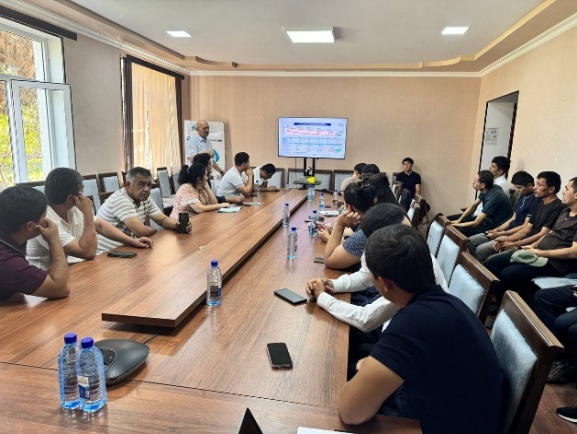
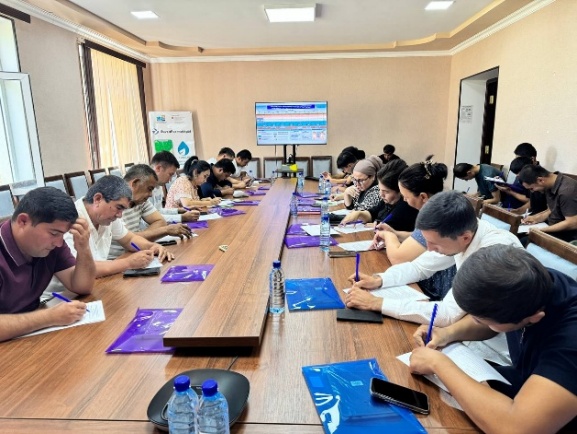
From 8 to 12 September, a specialised training session on “Salinity and Drainage Management” is being held at the Amu-Bukhara Basin Irrigation Systems Administration. The training is attended by specialists from basin and irrigation administrations, territorial units, the project team, and other relevant water sector organizations. The training covers the classification of land according to its suitability for irrigation, the physical and chemical properties of soils, mapping of groundwater levels and soil salinity, drainage management, the causes of salinity and its impact on crop yields. Practical sessions focus on the application of soil amendments, crop selection, efficient irrigation, prevention of groundwater level rise, reuse of drainage water, and monitoring with the participation of local communities.
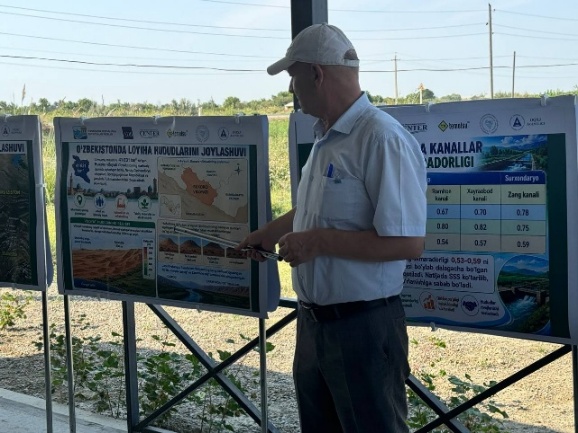
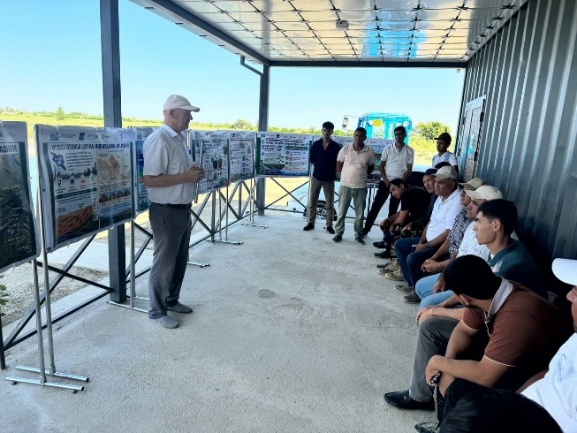
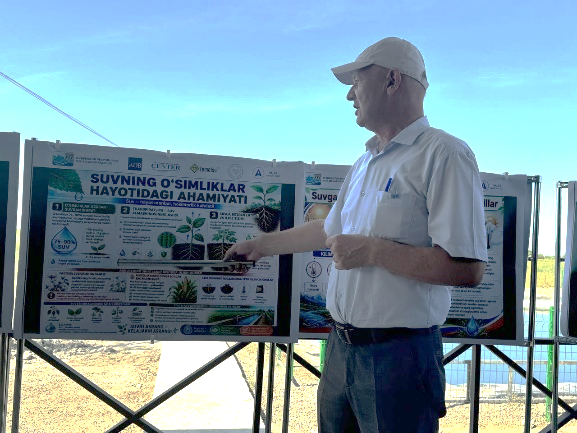
At the same time, practical training sessions are being conducted in Karakul, Alat, Jondor, and Bukhara districts for representatives of farms, agricultural clusters, and mahallas. The first stage focuses on “Farm-Level Management of Agriculture and Water Resources” and covers the assessment of crop water requirements, irrigation scheduling, the impact of climate change on crops and their water requirements, development of water use and water allocation plans, as well as water flow measurement and accounting. The second stage, dedicated to “The Interrelationship between Water, Soil and Agricultural Crops”, addresses the influence of soil type on irrigation and crop growth, irrigation timing and application rates, methods of saving water without reducing crop yields, as well as the management of soil moisture and salinity and the condition of agricultural crops.
An important feature of the programme is the combination of theoretical knowledge with discussions of practical issues, question-and-answer sessions, and the exchange of participants’ views and experience. Assessment of the training outcomes makes it possible to identify changes in participants’ levels of knowledge and practical skills. Overall, the September training programme brings together different levels of water resources management into a single capacity-building system from basin and irrigation systems to farms and individual water users thereby contributing to the development of coordinated management decisions based on the interrelationship between water, soil, and agriculture.